____________________________________________________________________________________________________
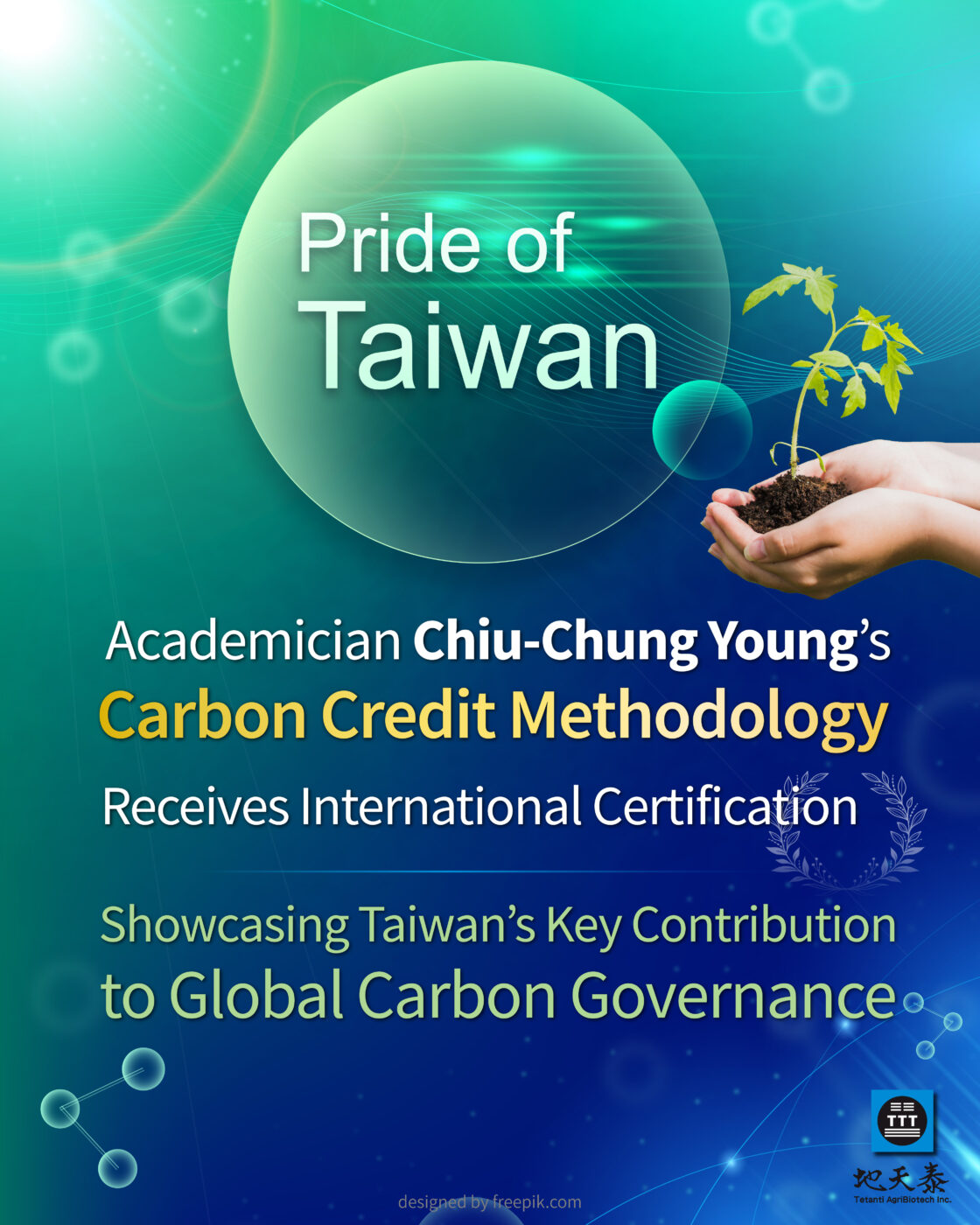
The carbon credit methodology proposed by Academician Chiu-Chung Young, titled “Avoidance of Methane Emissions from the decay of organic waste through resource processing” has officially received international certification. It has become a representative carbon reduction methodology under the framework of the Satoyama Initiative and Socio-Ecological Production Landscapes and Seascapes (SEPLS), demonstrating Taiwan’s technological strength in global carbon governance, sustainable agriculture, and the circular economy.
This methodology was certified with the support of the United Nations University Institute for the Advanced Study of Sustainability (UNU-IAS) and the International Partnership for the Satoyama Initiative (IPSI). The certification process was completed through a rigorous international expert review mechanism. It has also been recognized as one of the international carbon credit methodology practices promoted under the Satoyama Mace Initiative, indicating that both its scientific foundation and application potential have received strong international recognition.
The methodology is primarily based on the AMS-III.F carbon reduction methodology under the United Nations Clean Development Mechanism (CDM). Building upon this framework, it has been further expanded and optimized to create a more integrated mechanism for carbon reduction and carbon sequestration suitable for agricultural and community contexts. Its core principle follows that of AMS-III.F: by converting organic waste into resources, methane emissions generated during the anaerobic decomposition of piled or decaying organic waste can be effectively avoided. Once processed and applied to farmland, these organic resources can significantly enhance soil organic carbon content and soil health, thereby simultaneously supporting climate mitigation and sustainable agricultural development.
In addition, the methodology incorporates the “TTT®Technology”(Targeted Enzyme Processing Technology), originally developed by Academician Young, as one of its practical carbon reduction tools. This technology improves the efficiency and stability of organic waste resource conversion, strengthening both carbon reduction outcomes and the benefits of circular resource utilization. At the same time, the methodology integrates the biodiversity conservation and community participation principles emphasized by the Satoyama Initiative, ensuring that it not only focuses on greenhouse gas mitigation but also contributes to ecosystem services and local sustainable development.
This international certification not only highlights Taiwan’s research and innovation capacity in the fields of carbon credit methodologies and sustainable technologies, but also demonstrates that Taiwan’s academic achievements have successfully aligned with international frameworks for biodiversity and climate governance, providing a practical and scalable model for the global transition toward net-zero emissions and the Sustainable Development Goals (SDGs).