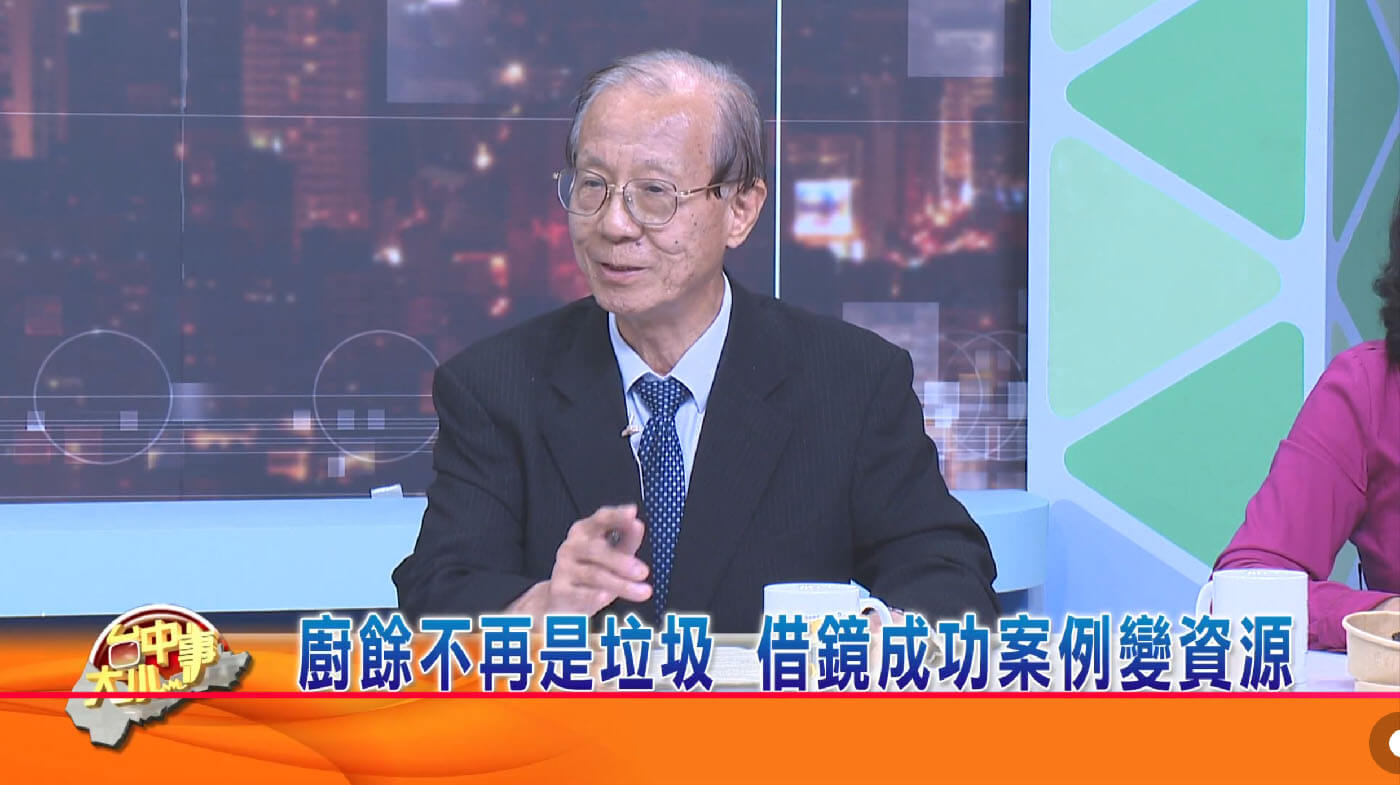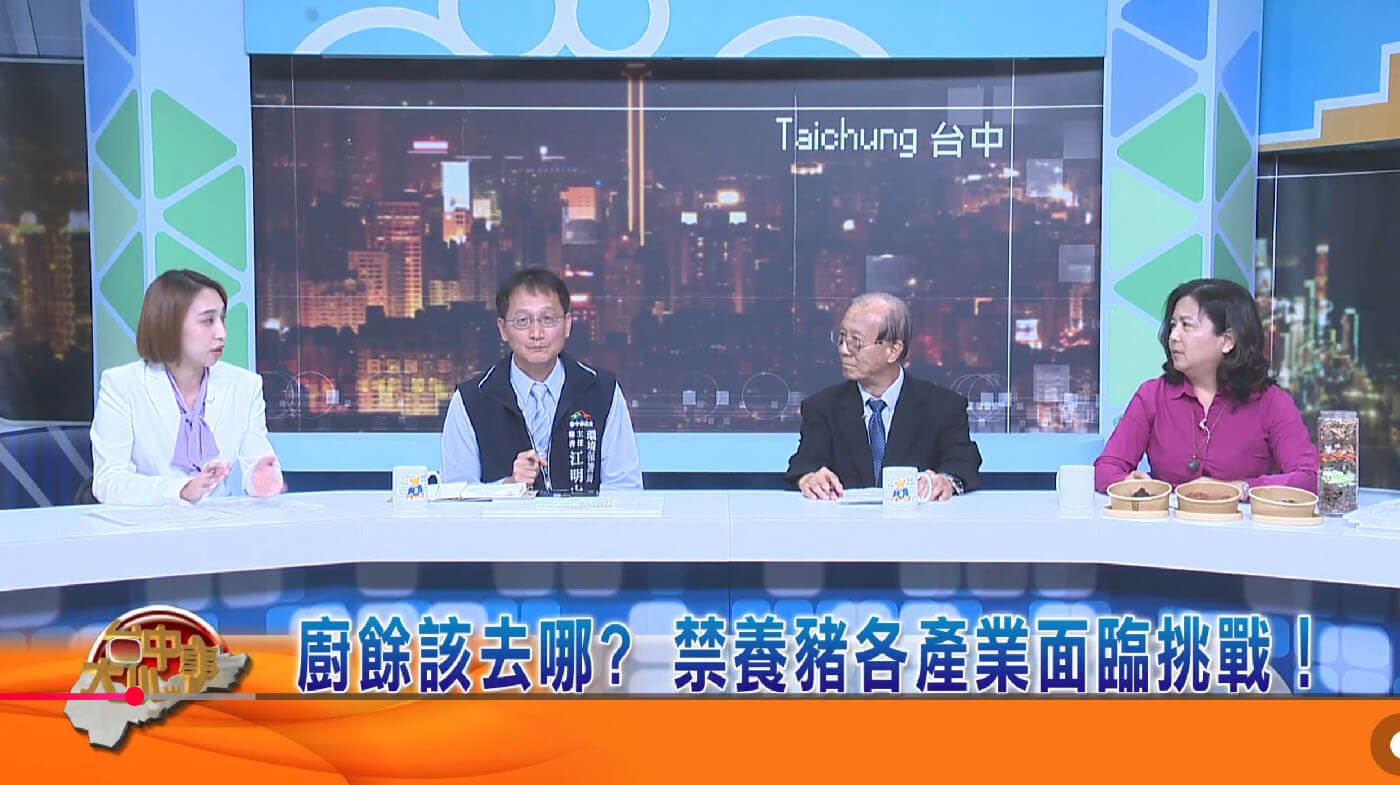
Academician Dr. Chiu-Chung Young, founder of Tetanti AgriBiotech Inc., was recently featured on TBC Television Channel 20’s “Taichung News & Affairs”, where he discussed the environmental impact and sustainable management of food waste in Taiwan.
Dr. Young emphasized that food waste is organic matter, and if not properly treated, its decomposition can release methane, nitrous oxide, and unpleasant odors, all of which contribute to climate change. Additionally, carbon dioxide emissions from organic waste further increase atmospheric greenhouse gas levels, which have already risen from 300 ppm historically to over 400 ppm today. Improper food waste handling not only accelerates climate change and extreme weather but also affects public health through odors and pests.
He also highlighted that food waste liquids often contain oil and salt, which can damage incineration facilities, while incineration may produce dioxins, posing additional risks to air quality. According to Dr. Young, proper management and treatment of food waste is essential for environmental sustainability.
Regarding treatment methods, Dr. Young explained that composting or fertilizer conversion is the most desirable approach. Food waste originates from agricultural products, and returning its nutrients to the soil aligns with the principles of the circular economy, improving soil health and fertility. Another method, anaerobic digestion for bioenergy production, generates electricity from biogas but also produces gases such as carbon dioxide, hydrogen sulfide, and nitrous oxide, along with wastewater and residual sludge. Without careful handling, valuable nutrients can be lost to the environment.
Dr. Young further noted that incineration and landfilling are less favorable, producing high levels of greenhouse gases, odors, and maintenance challenges. He stressed that source reduction is fundamental, yet the current challenge is insufficient treatment capacity. Since food waste is no longer widely used as pig feed, many volumes remain inadequately managed. Expanding capacity and developing flexible systems to handle peak volumes are critical to preventing excess waste from being incinerated or landfilled.
As a pioneer in organic waste resource conversion, Tetanti continues to advance sustainable solutions through its proprietary TTT® technology, transforming food waste into valuable organic fertilizer and supporting the development of a circular economy.